

n8 casino Plinko
Introduction
When I look at N8 casino Plinko, I do not see just another quick-play gambling product with a simple interface. I see a format that strips casino play down to its most exposed form: one ball, one drop, a field of pegs, and a result that feels both obvious and impossible to predict. That combination is exactly why Plinko has become so noticeable among modern online N8 Casino games review for players comparing real money casinos. It is easy to understand in seconds, but the actual player experience can change sharply depending on settings such as risk level, rows, and stake size.
For players in India who come across Plinko at N8 casino, the first impression is usually the same: this looks simple. And visually, it is. There are no reels, no paylines, no bonus rounds to decode, and no long rulebook. But that surface simplicity can be misleading. In practice, Plinko is a probability-driven game with a very specific rhythm. It can feel calm and repetitive at low risk, then suddenly turn tense and expensive when higher multipliers enter the picture.
That is why this page matters. If you want to know whether Plinko is worth trying, the right question is not “Is it popular?” but “What does it actually offer me as a player?” In this review, I will break down how N8 casino Plinko works, what the drop logic means in real sessions, where the attraction comes from, and where caution is necessary. The goal is practical clarity, not hype.
What Plinko is and why it captures attention so quickly
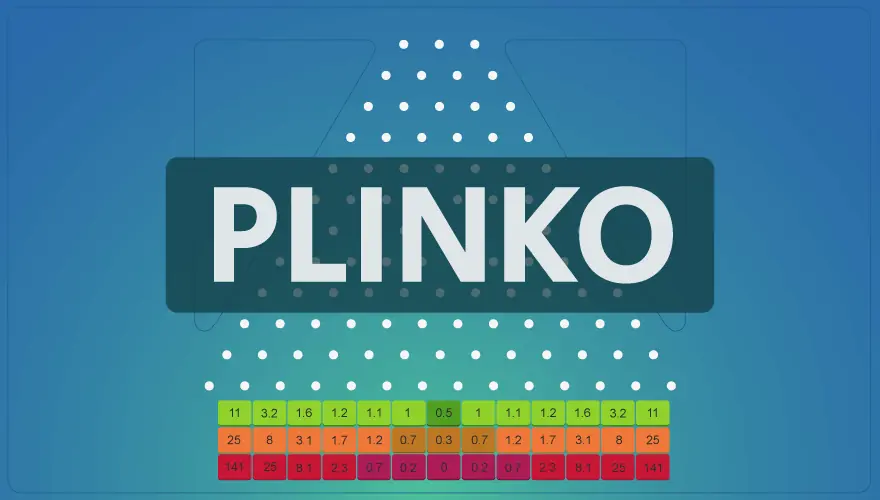
Plinko is a chance-based casino game built around a vertical board filled with pins or pegs. The player chooses a bet, often adjusts settings such as risk and number of rows, then drops a ball from the top. As the ball hits peg after peg, it bounces left or right until it lands in one of the payout slots at the bottom. Each slot has a multiplier attached to it. The final multiplier determines the return on that round.
The reason Plinko attracts attention so fast is straightforward: the entire outcome is visual. Unlike a slot, where the result is represented through symbols and animations, Plinko shows the path. You watch the ball travel. That visual journey creates anticipation in a very direct way. Even when players understand that the result is determined by the game’s random logic, the bouncing movement still makes every round feel personal and immediate.
There is another reason Plinko stands out. It compresses suspense into a few seconds. A slot can involve multiple reels, cascades, side features, and delayed reveals. Plinko gives you a short burst of uncertainty and a clean ending. For many players, especially those who prefer fast rounds and transparent presentation, that is a major part of the appeal.
One observation I find important here: Plinko often feels more “honest” to players than many other casino formats, not because it is more beatable, but because its structure is visible. You can literally see the path to the result, even though you cannot control it. That visual openness creates trust in some users, while the math underneath remains just as unforgiving as in other house-edge games. A quick read of N8 Casino roulette help answers most questions about limits and account settings.
How the Plinko system works in practice
At its core, the mechanic is built on repeated binary movement. Each time the ball hits a peg, it deflects left or right. Over many rows, those small deviations create a distribution of landing spots. The center slots are typically hit more often, while the edge slots are much rarer. Because of that, the highest multipliers are usually placed near the outer edges, and the lower multipliers sit closer to the middle.
In N8 casino Plinko, as in similar versions of the game, the player usually interacts with several key settings before dropping the ball:
- Bet amount — the value of each drop.
- Risk level — often low, medium, or high, affecting multiplier distribution.
- Rows — the depth of the board, which changes the path length and payout structure.
These settings matter because they reshape the session. A low-risk board generally offers more frequent modest returns and fewer extreme outcomes. A high-risk board does the opposite: many poor results, with a small chance of a large multiplier. More rows can increase the spread of possible landing positions, which often makes the board feel more dramatic and the top prizes more remote.
Here is a simplified view of how those settings usually affect the experience:
| Setting | What it changes | What it means for the player |
|---|---|---|
| Low risk | Narrower payout spread | More stable results, fewer sharp swings |
| Medium risk | Balanced multiplier range | Mixed session tempo, moderate variance |
| High risk | Wider payout spread, larger top multipliers | Long dry spells are more likely, but big hits remain possible |
| Fewer rows | Shorter path, simpler distribution | Quicker visual resolution, less dramatic spread |
| More rows | Longer path, broader outcome map | Higher tension, stronger sense of chasing rare landings |
One point players should understand before launching Plinko: the bouncing path looks physical, but the game is still a regulated random outcome product. The visual motion is part of the presentation. It helps communicate chance, but it does not create a skill layer. You are not timing the drop, reading angles, or improving through technique. The only meaningful decisions are bankroll-related: stake size, speed, risk setting, and session limits.
Why the game feels engaging and how its tempo shapes the session
Plinko has a very specific rhythm, and that rhythm is one of its strongest selling points. Each round is brief. There is almost no downtime between decisions. You choose settings, drop the ball, watch the path, get the result, and repeat. This loop is clean and fast, which makes the game easy to continue without friction.
That speed has two sides. On one hand, it keeps the experience focused. On the other, it can accelerate spending. In slots, elaborate animations and bonus sequences can slow the session down. In Plinko, especially with auto-play or repeated manual drops, a bankroll can move much faster than some players expect. This is not a flaw in the design; it is a practical consequence of the format.
I think this is one of the most overlooked facts about Plinko: its interface looks less aggressive than many top N8 Casino games before depositing real money, yet the pace can be financially harsher because the cycle is so short. A calm screen does not always mean a calm bankroll curve.
The engagement also comes from near-miss psychology. When the ball travels close to a high multiplier and then falls into a lower slot, the result can feel dramatically different from what the numbers alone suggest. That visual proximity creates emotional weight. In a slot, a non-winning spin often ends with a static layout. In Plinko, a low return can feel more vivid because you watched the ball flirt with a much larger outcome.
This is where the game becomes more than “simple.” The board is minimal, but the emotional pattern is not. It creates tension through motion, not through story or features. For some players, that is refreshing. For others, it can become repetitive once the novelty of the bouncing path wears off. For a closer look at the games library, N8 Casino legality help sorts the titles by theme and pace.
Understanding risk, probabilities, and the real nature of results
Before playing N8 casino Plinko, it is important to separate three ideas that players often mix together: probability, payout size, and short-term experience. A high multiplier does not mean a good session is likely. It only means that one rare outcome can pay much more if it happens. In many configurations, especially at high risk, the board is built so that low or modest returns occur far more often than the headline multipliers.
Plinko is often associated with volatility because the spread between common and rare outcomes can be large. But the exact feel depends heavily on settings. Low-risk Plinko can behave like a steadier grinder, with many rounds landing around small returns. High-risk Plinko behaves more like a chase format, where players may accept many disappointing drops in exchange for the possibility of a standout hit.
Here is the practical reading of probability in Plinko:
- Central outcomes are usually more common because there are more possible paths leading there.
- Edge outcomes are rarer, which is why the largest multipliers are placed there.
- The house edge stays constant, but volatility shapes how often wins land and how large the swings can feel.
What does that mean in plain terms? If you choose high risk because you saw an eye-catching multiplier, you should also expect longer stretches where the board gives very little back. The dramatic result is part of the offer, but so is the increased chance of repeated underperformance.
Another useful observation: Plinko can create an illusion of pattern because the ball path is visible. After several central landings, some players start feeling that an edge slot is “due.” That is a dangerous reading. Each round is governed independently. The board may produce streaks, clusters, and frustrating repeats, but those do not signal an upcoming correction.
Who Plinko suits and who may not enjoy it for long
Plinko tends to suit players who like short decision cycles, visible outcomes, and adjustable session profiles. If you enjoy changing settings and seeing how the same game behaves differently under low, medium, or high risk, Plinko has real value. It is also a good fit for players who do not care much about themes, narratives, expanding wilds, or layered bonus systems.
At the same time, it is not universally appealing. Some players quickly discover that Plinko offers less variety than they expected. Once you understand the board, the game loop remains largely the same. There is no evolving feature set, no unlocking structure, and no symbolic depth. The main variation comes from mathematical settings, not from content progression.
| Player type | Plinko may fit well if... | It may disappoint if... |
|---|---|---|
| Fast-session player | You prefer quick rounds and direct results | You want long-form bonus sequences |
| Math-focused player | You like adjusting risk and observing payout behavior | You mainly play for theme and presentation |
| High-variance chaser | You accept many weak rounds in pursuit of a big multiplier | You dislike dry spells and sharp bankroll swings |
| Casual slot fan | You want something simpler than reels and paylines | You need more variety to stay engaged |
If I had to summarize the fit in one line, I would say this: Plinko is best for players who enjoy probability in motion. If you want a more cinematic or feature-rich casino session, other formats will likely hold your attention better.
How Plinko differs from slots and other common casino formats
The clearest difference between Plinko and classic slots is structural. Slots are built around reels, symbol combinations, and often a layered reward model that can include free spins, multipliers, respins, sticky symbols, and bonus rounds. Plinko removes almost all of that. It gives you one event and one destination. The simplicity is not cosmetic; it is the entire design philosophy.
Compared with roulette, Plinko shares the idea of a single resolved outcome, but the emotional delivery is different. Roulette is immediate and static once the wheel settles. Plinko stretches the suspense through visible descent. Compared with complete N8 Casino crash games review, Plinko feels less about timing and more about accepting a pre-set chance distribution. Compared with dice-based games, it is more visual and easier for many players to follow intuitively.
What stands out most is that Plinko makes variance feel tangible. In a slot, volatility is often something players infer over time. In Plinko, the board layout itself suggests where the danger and the temptation are. The low-value middle and the rare outer prizes are visible at all times. That transparency is one of the reasons the format has gained traction.
Still, visibility should not be confused with control. This is where some new players misread the format. The board looks interactive, but the strategic depth is limited. You can shape the profile of the session, not the path of an individual ball.
Practical strengths and weak points of N8 casino Plinko
From a player’s point of view, the strengths of N8 casino Plinko are real and easy to identify. The game is accessible, the rules are immediate, and the settings can materially change how the session feels. That is more than can be said for many casino products that look different on the surface but play almost the same underneath.
The strongest points, in my view, are these:
First, clarity. You do not need a long learning curve. A new player can understand the board in moments and still spend time exploring how risk settings alter the session.
Second, speed. For players who dislike slow-loading rounds or feature-heavy slots, Plinko offers a cleaner loop.
Third, visible probability structure. You can see the payout map and understand, at least conceptually, why some outcomes are rare and others frequent.
But the limitations are just as important.
Repetition is a real issue. Once the visual novelty fades, some players find the loop too narrow. The game does not evolve much during play.
High-risk settings can distort expectations. Large multipliers look exciting, but they can encourage players to underestimate how many weak outcomes may come first.
Short, frictionless rounds make the session pace deceptively quick, so despite the straightforward interface, disciplined bankroll control carries more weight than the surface simplicity implies.
This leads to one of the more memorable truths about Plinko: it is one of the few casino formats where boredom and overexcitement can arrive from the same screen, depending entirely on the chosen settings. Low risk may feel too flat for some. High risk may feel too punishing for others. The sweet spot is personal, not universal. Table game fans will get more out of this review after reading N8 Casino Aviator crash game.
What to check before you start a real-money session
Before launching Plinko with real stakes, I recommend treating it less like a toy and more like a pacing-sensitive gambling product. That means looking at a few practical details before the first drop.
- Check the risk setting first. Do not start on high risk just because the top multiplier looks attractive. Decide what kind of session you actually want.
- Set a drop budget, not only a money budget. Because rounds are fast, it helps to define both how much you can spend and how many drops you are willing to play.
- Understand the role of rows. More rows can make the board feel more exciting, but they can also make rare outcomes feel even more remote.
- Use demo mode if available. It is one of the easiest ways to understand whether the rhythm suits you before real money is involved.
That last point is especially useful for new players in India who may be familiar with slots but not with Plinko. Demo play will not tell you what your paid session will look like, but it will show whether you enjoy the pace, the repetition level, and the visual logic of the board.
I would also add one practical warning: do not evaluate Plinko based on a handful of dramatic clips or streamer highlights. Those moments usually show the edge-case excitement, not the average session texture. Most real sessions are built from many ordinary drops and only occasional standout results.
Final verdict on N8 casino Plinko
N8 casino Plinko offers something very specific: a fast, visually transparent, probability-driven casino experience where the tension comes from watching a simple event resolve in real time. Its key strength is not complexity, but concentration. The game removes distraction and turns every round into a short encounter between expectation and randomness.
That is exactly why some players enjoy it so much. It is easy to enter, easy to repeat, and flexible enough to feel different under low and high risk. If you like quick rounds, visible outcome logic, and a format that lets you adjust the session profile without learning a dense ruleset, Plinko can be a strong choice.
At the same time, caution is necessary. The interface is simple, but the bankroll pressure can be real. High multipliers can overshadow how often lower returns appear, and the rapid pace can make losses accumulate quietly. For players who want feature depth, thematic variety, or a more layered reward structure, Plinko may feel too narrow after the first phase of curiosity passes.
My honest conclusion is this: Plinko is worth trying if you want a clean, high-clarity gambling format and you are comfortable with the fact that simplicity does not mean softness. It can be engaging, tense, and efficient. It can also be repetitive and unforgiving if approached with the wrong expectations. The better you understand its rhythm and distribution logic before you start, the more accurately you will know whether this is your kind of game.
FAQ
How does Plinko work in the online casino when the ball drops?
A round starts when the ball is released. It bounces along the pegs and lands in one of the multiplier slots at the bottom. The multiplier shown for that slot determines the round result.
What does multiplier risk level mean on Plinko, and how is volatility shown?
Multiplier risk level describes how often lower or higher multipliers appear over time. Higher volatility Plinko generally means bigger swings between small and large outcomes. The risk indicator is displayed in the game lobby or game settings.
Where can the live table or Plinko lobby be accessed after casino login on N8?
Logging into the account gives access to the game lobby. From there, Plinko rounds can be launched directly in the games section. If any tile does not load, refreshing the lobby usually restores it.
What should be checked before starting a Plinko round with a new bonus-funded balance?
The bonus terms must allow Plinko play and specify any wagering requirements. Players should also confirm the eligible balance type in the cashier or account balances view. If a round is started with the wrong balance, the bonus rules may not apply.
Is it possible to launch Plinko on a mobile casino app, or is mobile browser play the safer option?
Plinko works in both the mobile version and a mobile casino app experience, depending on device. Using the official app usually keeps session controls straightforward. If a round fails to start on the app, switching to the mobile browser is often a quick fallback.
How is Plinko different from other casino games like roulette or blackjack in the game lobby?
Plinko centers on watching a single ball travel through pegs to a multiplier slot. Roulette and blackjack are based on different round structures and decision points. Plinko is fast-paced and usually focuses attention on volatility and stake pacing rather than strategy.
What responsible play options should be used on the N8 Plinko page to manage session risk?
Use responsible gambling tools such as deposit limits and session management features available in the account area. Keeping stakes aligned with personal limits helps reduce stress during volatile rounds. A short demo session before real-money play is a practical way to tune comfort with multipliers.